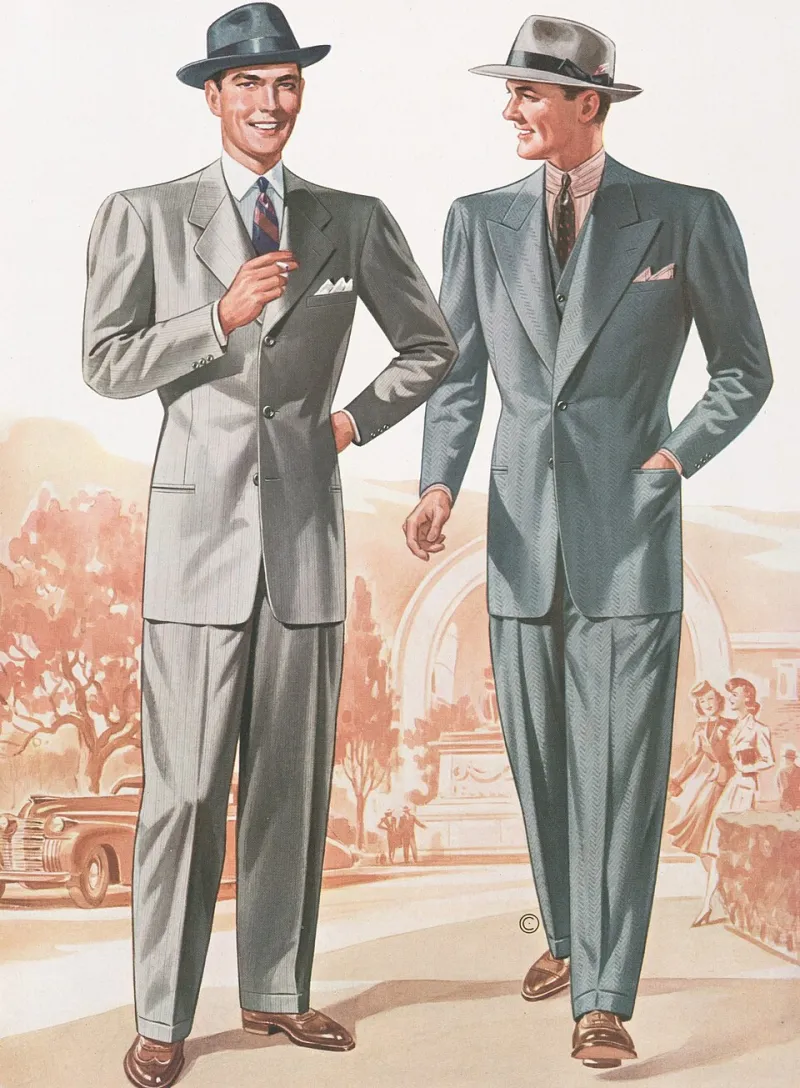
The Supporting Role: Dressing as Father of the Bride Without Taking the Spotlight
Photo: Unknown, CC0, via Wikimedia Commons
Few wedding roles carry as much quiet responsibility as father of the bride. You may be hosting, speaking, walking the bride down the aisle or simply standing close by while the couple take centre stage. Your tailoring should support that role. The aim is not to look unimportant; it is to look appropriate, composed and entirely in service of the occasion. In 2026, British weddings move between church formality, marquee informality and everything in between, so the first decision is not the suit. It is the brief.
Know the Brief Before You Choose the Suit
Before you book a fitting, ask the couple three questions: what is the dress code, what time does the ceremony begin and what colours are already in the wedding party? The answers will narrow the field faster than any style rule. A formal morning wedding in a city church calls for something different from a late-afternoon registry office ceremony or a barn reception in the countryside. If the invitation says black tie, follow it; if it says lounge suit, do not arrive in morning dress because you have always liked the idea. The couple may also have a palette for the wedding party. You do not need to match it, but you should avoid clashing with it. A father of the bride in a loud check beside a bride in soft ivory and a groom in muted navy will photograph badly, however well each piece fits on its own.
Morning Dress or Suit?
Morning dress remains the most formal daytime option for a British wedding, particularly for church ceremonies and traditional London venues. It consists of a morning coat, waistcoat and striped trousers, usually in black or dark grey. If you already own morning dress and it fits, it is worth using; if you are hiring, book early and allow time for adjustments. Do not assume that morning dress is required. Many couples now choose suits for the whole wedding party, and a well-cut navy or charcoal suit can look entirely correct at a formal wedding. For daytime, avoid black suits, which can read as funeral wear, and avoid very light colours that may look casual in photographs. Mid-grey, navy and charcoal are reliable. In winter, flannel or a heavier wool gives warmth and a matte finish. In summer, a lightweight wool or a wool-linen blend is more comfortable than a stiff synthetic cloth.
Colour, Waistcoat and the Couple’s Palette
The father of the bride should not try to match the groom. If the groom is in navy, a father in charcoal or mid-grey will look distinct without competing. If the wedding palette is sage, dusty blue or burgundy, you can echo it in a tie, a pocket square or a subtle waistcoat, but keep the suit neutral. A waistcoat is optional with a lounge suit, though it can add formality and help to tidy the line at the waist. If you wear one, make sure the jacket is cut to accommodate it; a waistcoat that peeks below the jacket hem looks like an afterthought. With morning dress, the waistcoat is part of the uniform, so choose a subtle contrast rather than a novelty colour. Shoes should be polished Oxfords or Derbies in black or dark brown. Cufflinks, if worn, should be simple. The overall effect should be of a man who has dressed for the occasion, not for the photograph album.
Accessories That Help Rather Than Compete
Accessories are where fathers often overcorrect. A wedding is not the moment for a new signet ring, a novelty tie or a pocket watch on a chain unless it is a genuine family piece. A white linen pocket square is almost always right. A tie should be in good condition, with a knot that suits the collar; a full Windsor is not compulsory, and a four-in-hand often looks more natural. If the couple has asked the wedding party to wear buttonholes, wear yours properly and early. A watch should be discreet. The best accessories at a wedding are the ones that do their job and then disappear from notice: a well-pressed shirt, a tie that sits flat, shoes that have been cleaned and a jacket that closes without strain.
Dressing for the Photographs
Wedding photographs are unforgiving in ways that mirrors are not. Flash picks up sheen, so a shiny suit can look cheaper than it is, while a matte wool or flannel photographs with depth. Group shots expose collar gaps, jacket sleeves that are too long and trousers that break badly over the shoe. Have a friend take a few photographs in daylight before the wedding, both standing and sitting. Check how the jacket behaves when you are seated, because you will spend much of the day at a table. If you are giving a speech, put your cards in an inside pocket rather than a trouser pocket, and keep a proper handkerchief in another pocket. A pocket square is not a tissue. If the ceremony is outdoors, consider the wind and the weight of your jacket; a lightweight square that flutters is worse than none at all.
The Fitting and Alteration Checklist
Begin with time. Decide on morning dress or suit three to four months before the wedding, buy or hire eight to ten weeks out, and book a first fitting four to six weeks before the day. A final fitting two weeks before leaves room for adjustments without panic. At the fitting, wear the shirt and shoes you intend to wear. Check the shoulders first, because they are the hardest part to alter. Then check the collar, the sleeve length, the jacket length, the waist suppression, the trouser break and the seat. Raise your arms, sit down, hug someone and walk across the room. A jacket that looks perfect standing still may be uncomfortable after an hour. Ask the tailor to check the waistcoat length if you are wearing one, and the position of the pockets if you plan to carry a phone or speech cards. Alterations should make the suit feel like yours, not change its fundamental cut.
The Day Itself
On the day, arrive early and keep your jacket buttoned when standing for photographs. Do not spend the ceremony adjusting your cuffs or pulling at your collar; good alterations should make that unnecessary. Keep your pocket square neat but not rigid, and leave the tie alone. If you are hosting, you will be moving between guests, so comfort matters as much as appearance. A well-fitted suit will allow you to sit, stand, greet and dance without constant correction. The father of the bride is part of the setting rather than the centre of it. The best compliment is not that people noticed your tailoring, but that the day felt complete.
A Short Checklist
- Confirm dress code, time and palette with the couple.
- Choose morning dress or a navy, charcoal or mid-grey suit.
- Book fitting and alterations with time to spare.
- Wear the intended shirt and shoes to fittings.
- Check shoulders, collar, sleeves, jacket length and trouser break.
- Test sitting, walking, hugging and dancing.
- Keep accessories simple: white linen square, polished shoes, discreet watch.
- Prepare a handkerchief, not a pocket square, for the ceremony.
- Arrive early and leave the jacket alone once it is buttoned.
The role is supportive. The tailoring should say so.