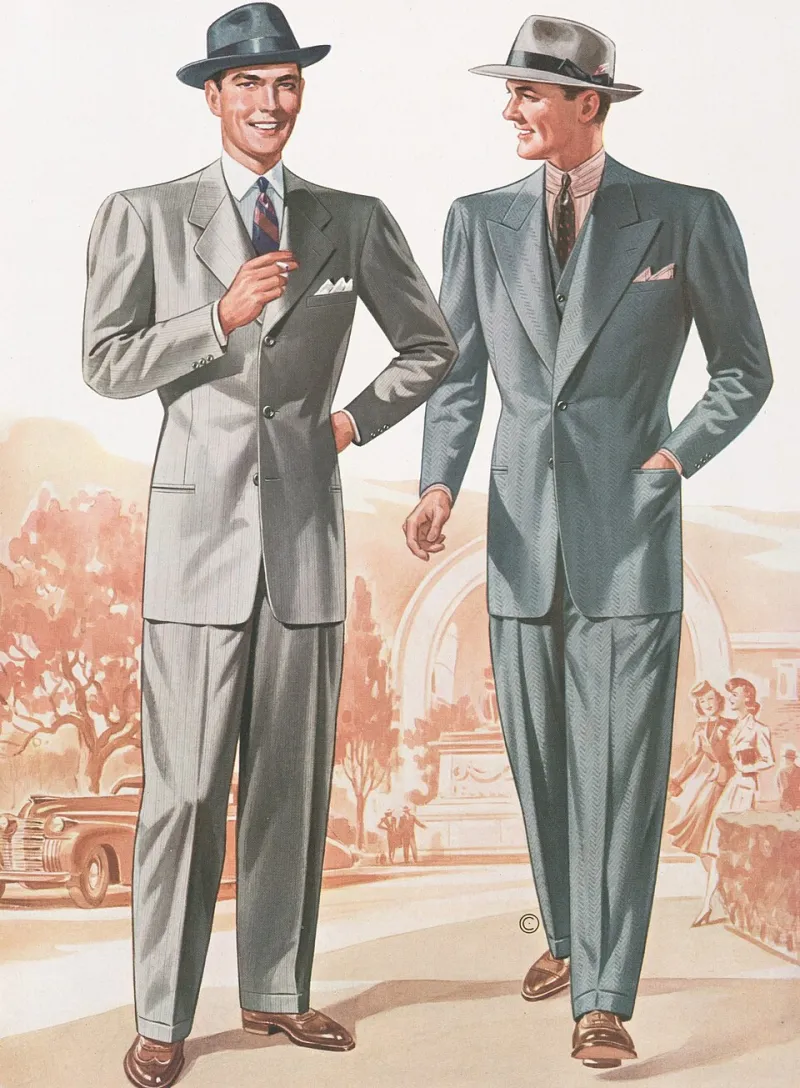
Where Trousers Meet the Pavement: A British Guide to Trouser Breaks

Photo: Mgglputs, CC BY-SA 4.0, via Wikimedia Commons
Trouser length is one of the few tailoring decisions a man makes with his shoes on and the weather in mind. In a British formal wardrobe, the hem is not a finishing flourish. It is the point where cloth, shoe and pavement negotiate. A pair of trousers that looks immaculate in a fitting room can look defeated by the time it has crossed a wet forecourt, climbed a station stair and settled into an office chair. The break — the fold or contact point where the hem meets the shoe — is therefore a practical choice as much as an aesthetic one.
Start with the shoe, not the runway
The shape of the shoe changes the hem. A slim Oxford with a low profile wants a cleaner line; a Derby with a rounded toe or a heavier sole can carry more cloth. A loafer exposes more ankle and makes a no-break hem look deliberate; with a chunky rubber sole, the same hem can look short. This is why the useful starting point is not a photograph of a catwalk model but the pair of shoes you will actually wear.
For UK formalwear, the shoe also has to survive real conditions. Leather soles, commuter grit and sudden showers all affect how a trouser hem hangs. Bring the intended shoes to the fitting, and wear them on the day of the final hem. A hem pinned over a thin display sole can sit a centimetre too high once a proper welt and heel are underneath.
The three breaks in plain terms
A full break produces a single fold across the front of the trouser leg, sometimes with a slight second crease. It is forgiving, traditional and comfortable when sitting, but it can pool over the shoe and wick rainwater upwards. On a rainy British day, a heavy full break is a liability as well as a look.
A half break is the most versatile choice for formal trousers in the UK. The hem touches the shoe with a slight crease but does not bunch. It keeps a clean line, allows for movement and looks correct with both Oxfords and Derbies. For most men, most suits and most British weather, it is the sensible default.
No break leaves the hem just above the shoe, often exposing a little sock. It can look sharp in a photograph and is popular in contemporary tailoring, but it is less forgiving. It makes the leg look shorter, draws attention to the ankle and offers no protection from splashes. The runway's cropped trouser is not a useful default for a commuter.
Rain, paving and the case for a turn-up
A turn-up adds weight to the hem and can help trousers hang cleanly. On grey flannel or a heavier worsted, a modest turn-up of around four centimetres is a practical British detail: it protects the edge from scuffs and gives the trouser a little more presence over a substantial shoe.
It is not a universal remedy. A turn-up can collect grit and hold a shallow pool of rain. On very slim trousers it can look bulky; on a short leg it can shorten the line further. It is also best avoided on formal evening trousers, where a plain hem is usually cleaner. Think of a turn-up as a daywear decision, not a default.
If you commute by train, walk between stations and spend the day in an office, test the hem while walking and climbing stairs. A trouser that looks right standing still can catch on a heel or flap against the shin once you move. The hem should clear the shoe without collapsing onto it.
What alterations actually cost
A basic hem is rarely expensive on its own — often £15 to £30 at a competent high-street tailor — but the cost rises with turn-ups, tapering and rehemming. A turn-up may add £10 to £20. If the trouser leg needs narrowing above the knee, the price climbs further. The real cost is cumulative: a cheap suit with a poor hem can end up costing more to correct than a better suit bought with an unfinished leg and hemmed once.
Before agreeing to alterations, ask whether the trouser has a hem allowance. It is easier and cheaper to let down a hem than to lengthen a trouser that has been cut too short. A hem that is too long can be corrected within limits; a hem that is too short cannot be rescued without a false hem or a replacement panel, neither of which is desirable on formal trousers.
How to brief a tailor
Take the shoes. Wear the trousers at the waist you actually use, not pulled up for the fitting. Stand naturally, then walk a few paces and sit down. Ask for the hem to be pinned at the front and the back, because the two views often differ. A good tailor will check the back of the shoe as well as the front.
Use plain language rather than vague shorthand. Say you want a half break with a slight forward crease, or a full break that just touches the shoe. If you want a turn-up, specify the depth. Mention rain, commuting and whether you will wear the trousers mostly with leather soles or rubber. The tailor can then leave enough length for the trouser to sit correctly without dragging.
Finally, check the finished hem in daylight, with the shoes on, and walk across a hard floor. A formal trouser should look deliberate rather than borrowed. The right break is the one that keeps its line when the pavement is wet and the day is long.