The Smaller Ceremony: How to Dress for a Civil Wedding Without Overplaying It
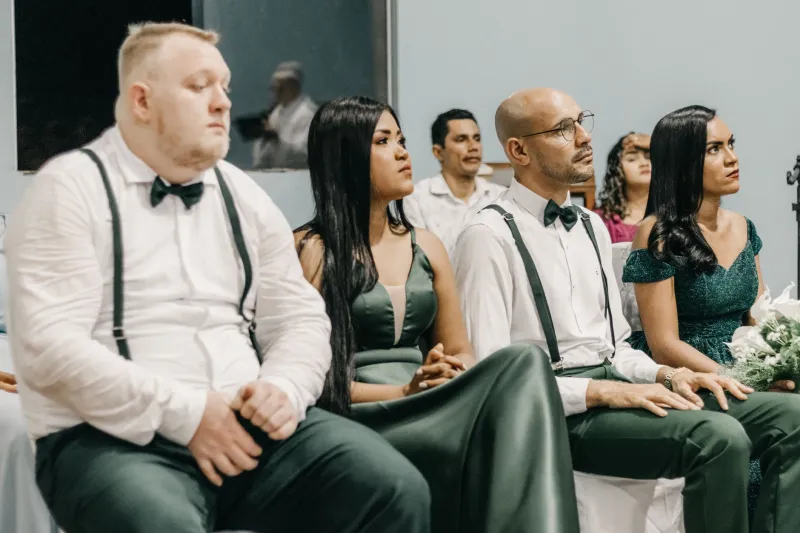
A civil ceremony in a register office, a town hall or a small country house presents a particular British dress-code problem. The occasion is unquestionably formal, but the setting rarely supports the full apparatus of morning dress. A man who arrives in a top hat and tails may look as though he has misunderstood the invitation; a man who arrives in an open-necked shirt and trainers may look as though he has ignored it. The answer lies not in choosing between those extremes, but in calibrating the middle ground with care.
Begin With the Invitation, Not the Imagination
The wording of the invitation is the first and most reliable guide. If it specifies morning dress, that instruction should be followed, whatever the size of the guest list. If it says 'lounge suit' or gives no dress code at all, the presumption is a suit and tie, with room for judgement. For a civil ceremony, the default is a well-cut suit in a restrained colour, a proper shirt, a tie and polished shoes. This is not a lesser standard; it is simply a different one.
The size and style of the venue matter, but they should not override the couple's wishes. A small register-office ceremony followed by lunch in a restaurant calls for a neat suit, not a tailcoat. A marquee reception in the grounds of a country hotel allows a little more cloth and colour. The useful question is not 'How formal can I be?' but 'What will make the couple feel that their occasion has been properly honoured?'
The Suit: Mid-Grey, Navy and the Case Against Black
For smaller weddings, navy and mid-grey are the most dependable choices. Navy is flattering, adaptable and familiar; mid-grey reads as formal without the funeral associations that can cling to charcoal in certain lights. A suit in either colour will serve for the ceremony, the meal and any evening element without looking out of place.
Black suits are best avoided unless the invitation explicitly asks for black tie. In a register office or a small dining room, black can appear either overly sombre or oddly theatrical. If a man already owns a black suit and is disinclined to buy another, he should wear it with a lighter shirt and a tie that introduces some warmth, but navy or grey remains the safer default.
Double-breasted jackets can work well at intimate weddings, provided the fit is clean and the button stance is not too high. A single-breasted two-button suit is the more versatile option and will earn its keep beyond the wedding season. Either way, the shoulders must sit correctly; no amount of accessorising will compensate for a jacket that is too narrow or too wide across the back.
Cloth for the Season
British weather makes cloth weight a practical consideration as well as an aesthetic one. A four-season worsted suit in the region of 260–300g will cover most civil ceremonies from April to October. For high summer, a lighter worsted or a wool-linen blend can be sensible, particularly if the day involves travel on public transport. Linen in its pure form creases readily and can look too relaxed for a formal ceremony, but a linen-rich blend holds a smarter line.
In winter, flannel and heavier tweed come into their own. A mid-grey flannel suit is quietly formal and suits the atmosphere of a small winter wedding, while a dark green or brown tweed can work for a country ceremony if the invitation is relaxed enough. The caution with tweed is that it can read as sporting rather than ceremonial; it should be paired with a crisp shirt, a wool tie and polished leather shoes to keep the balance on the formal side.
Shirt and Tie: Precision Without Stiffness
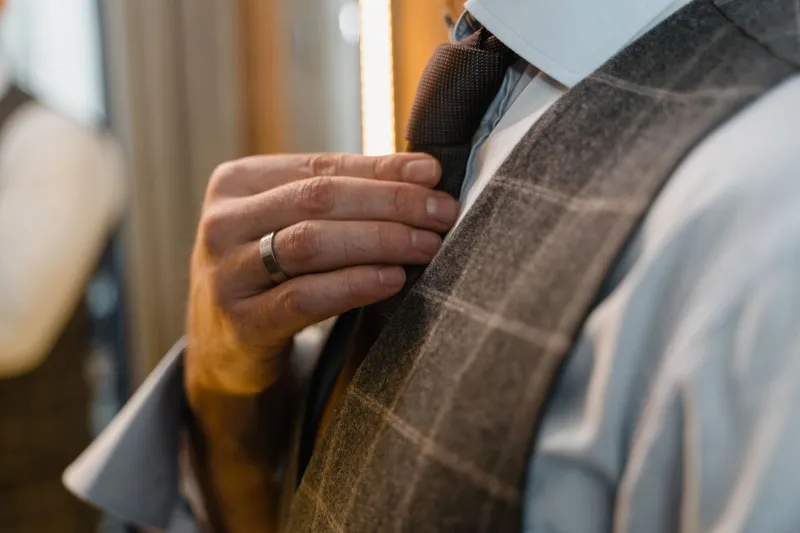
A white shirt remains the most reliable choice. A pale blue shirt is equally acceptable and slightly less severe, particularly for daytime ceremonies. The collar should sit close to the neck without pinching, and the points should be long enough to sit under the jacket lapels without disappearing. A spread collar is a good middle ground: formal, but not as demanding as a cutaway.
Ties should be chosen with restraint. A wedding tie in a subtle pattern — a small houndstooth, a neat geometric or a muted stripe — adds interest without turning the outfit into a costume. Solid ties in burgundy, forest green or navy are dependable. For a summer ceremony, a lighter silk or a cotton tie can be appropriate, but shiny satins are best left to black tie. The tie knot should be tidy and proportionate; a full Windsor is rarely necessary and can overwhelm a smaller collar.
Footwear for Registry Offices and Reception Rooms
Black Oxford shoes are the default for formal civil ceremonies and will look correct in almost any setting. Dark brown Oxfords or derbies are a reasonable alternative with navy or grey suits, particularly for daytime weddings. Loafers can work if they are sleek and well polished, but they should not be the casual slip-on variety. Trainers, however fashionable, are out of place at a formal ceremony unless the invitation makes clear that the dress code is relaxed.
Socks should match the trousers rather than the shoes, and they should be long enough to remain unseen when seated. A leather sole is appropriate for most venues, though a rubber sole is more practical in wet weather and on uneven ground. If the forecast is poor, a man may prefer to travel in a second pair of shoes and change at the venue; this is a small consideration that preserves both comfort and appearance.
Photographs, Travel and the Long Day
Smaller weddings often involve more movement than larger ones: a walk from the register office to a restaurant, a journey between venues, photographs in a park or on a cobbled street. A suit that photographs well but restricts movement will make the day feel longer than it need be. Check that the jacket allows you to raise your arms, that the trousers are not too tight across the thigh, and that the collar does not ride up when you turn your head.
A well-pressed pocket square in white linen or a subtle colour is a sensible addition, but it should not be used as a substitute for good fit. In changeable weather, a lightweight overcoat or a trench coat in navy or camel will protect the suit without looking out of place. An umbrella is not a failure of style; it is evidence of having read the forecast.
A Final Check
The standard for a civil ceremony or an intimate wedding is not greater formality than the occasion requires, but sufficient care to show that the occasion matters. A navy or mid-grey suit, a clean shirt, a considered tie and polished shoes will meet that standard in almost every British setting. The aim is to look as though you have thought about the day, not as though you have dressed for a different one.