An Optional Layer: Deciding on the Waistcoat for British Formal Occasions
The waistcoat is the rare garment that can make a formal outfit look more considered and, with one wrong choice, more contrived. In British formal dress it sits between tradition and performance: expected at some weddings and race meetings, optional at most dinners, and easily overdone. The useful question is not whether a waistcoat is handsome, but whether it belongs to the particular outfit, body and occasion. The following guide treats it as an optional layer to be judged on fit, cloth and context.
Start with the invitation, not the wardrobe
Before considering cloth or cut, read what the occasion asks. A lounge suit wedding in 2026 may invite a waistcoat without requiring one; morning dress at the races usually has its own conventions; a black-tie dinner has a narrower set of answers. At black tie, a waistcoat may replace a cummerbund, not accompany it, and should be cut for evening dress rather than borrowed from a business suit. At a winter dinner in a restaurant, a waistcoat under a tweed or flannel jacket can look appropriately layered; at a summer wedding, the same impulse may simply add heat. The garment earns its place when it answers a dress code or a practical need, not when it is added to signal effort.
The fit at the waist and armhole
Fit matters more than decoration. A waistcoat should sit close to the shirt without pressing creases into it, and it should cover the trouser waistband when the wearer stands and sits. Too loose and it billows above the jacket; too tight and it pulls at the buttons and rides up. Look for a waist adjuster at the back, but do not use it to correct a poor fit at the chest. The armholes deserve particular attention. A high, close armhole keeps the front of the waistcoat against the body when the arms move; a low, wide one gapes and shows shirt at the side. Raise your arms, sit down, and reach across a table before deciding. Length is equally practical: the points should not extend far below the jacket, and the bottom button is traditionally left undone.
Matching cloth or a deliberate contrast
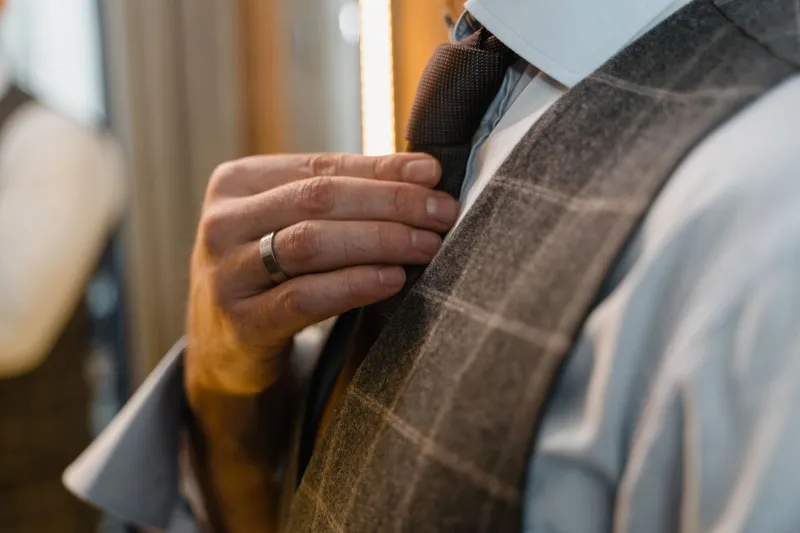
For formal wear, matching the suit cloth is the safer route. A waistcoat cut from the same length as the jacket and trousers creates an unbroken line and reads as part of the suit rather than an addition. This is especially true for lounge suits at weddings and for business-adjacent formal events. Contrasting waistcoats can work, but they need a reason: morning dress may call for a lighter or patterned waistcoat, and a tweed or flannel ensemble can carry a modest contrast in colour or texture. The risk is costume. A sharply contrasting waistcoat, a contrasting tie and a pocket square all at once can make the wearer look dressed for a period drama rather than a wedding. If the waistcoat contrasts, keep the other accessories quiet.
Backless or full-back
Backless waistcoats are designed to be worn under a jacket. They are cooler, less bulky and easier to adjust, which makes them useful at British summer events where a full waistcoat plus jacket can become uncomfortable. The trade-off is exposed shirt at the back if the jacket comes off. A full-back waistcoat is the more formal choice and the better one if there is any chance the jacket will be removed during the reception or dinner. In winter, a full back adds warmth; in summer, it can be a liability. Decide honestly how the event will unfold. If the jacket will stay on, a backless style is practical. If it will not, choose a full back or leave the waistcoat off.
Wearing one without overheating
British summer formalwear often involves a jacket, a tie and a waistcoat in weather that does not respect the calendar. The first defence is cloth: a lightweight worsted, a linen-blend waistcoat or an unlined backless style will be more bearable than a heavy flannel. The second is timing. A waistcoat can be worn for the ceremony and photographs and removed, with the jacket, when the room warms up; but removal should look deliberate, not like undressing. If the waistcoat is backless, removing the jacket exposes its construction, so keep the jacket on or choose a full back. Finally, consider whether the waistcoat is doing any work. If the jacket is closely cut and the shirt and tie are already formal, the extra layer may be unnecessary. Elegance in warm weather is often a matter of subtraction.
When to leave it off
There are clear cases for omission. A double-breasted jacket already provides a layered front and rarely needs a waistcoat beneath. A very close-fitting suit may become bulky with an added layer. A casual or semi-formal dress code may make the waistcoat look effortful. And if the outfit already has a strong pattern or accessory, the waistcoat can tip the balance from polished to overworked. The waistcoat is at its best when it looks inevitable: the same cloth as the suit, a clean fit at the waist, and a style suited to whether the jacket will stay on. Treated as an optional layer rather than a required flourish, it can earn its place. Treated as a shortcut to formality, it rarely does.