The Optional Clause: Reading Black Tie Invitations Without Overreach

Photo: Copernicus Sentinel-2, ESA, CC BY-SA 3.0 igo, via Wikimedia Commons
Black tie optional is one of the more civilised inventions of the modern invitation, and one of the most treacherous. It promises flexibility, but it also transfers the burden of judgement to the guest. In a British context, where formality is often signalled by what is left unsaid, that can be awkward: the invitation says optional, the venue says grandeur, and the host, quite reasonably, says nothing at all. The result is a room in which some men arrive in a full dinner suit and others in the navy suit they wore to the office. Both can be wrong, for different reasons.
The code does not mean that anything goes. It means that black tie is welcome but not compulsory. The guest who treats optional as a synonym for casual will look underdressed; the guest who treats it as a command will look as if he has misread the occasion. The aim is not to split the difference by wearing half a dinner suit, but to choose a coherent level of formality and carry it with confidence.
Read the invitation before the wardrobe
Start with the document itself. An invitation that specifies black tie optional for an evening reception, a winter gala or a City dinner is usually signalling that dinner jackets are appropriate, while allowing for men who do not own one. A wedding invitation that uses the same phrase for a late-afternoon ceremony is a little more complicated: the earlier the hour, the more likely that a dark suit is the better answer. Venue matters too. A livery hall, a grand hotel or a museum after dark will carry a dinner jacket naturally; a village hall, a marquee or a country house at midday will not.
If the wording is genuinely ambiguous, ask. A quiet question to the host, the best man or the organiser is not a failure of style; it is evidence of good manners. Do not ask in a group chat the week before the event, and do not use the question as an opportunity to announce your own plans. Simply establish what the host expects. In most cases the answer will be some version of: dinner jackets if you have one, dark suits if not.
The dinner jacket, kept quiet
For the man who chooses the more formal route, the dinner jacket should be understated. Black or midnight blue, single-breasted, one button, with a modest shawl or peak lapel in satin or grosgrain. Midnight blue is especially useful for a black tie optional occasion because it reads as formal without announcing itself as costume. Avoid anything that looks hired for a musical: contrasting lapels in high shine, excessive velvet, embroidered motifs or a jacket cut like a shortened tailcoat.
The trousers should match the jacket in cloth and colour, with a single stripe of satin or grosgrain if the jacket has a matching trim. A black bow tie should be self-tied; a pre-tied bow is tolerable only in genuine emergency. A white dress shirt, either pleated or with a marcella front, and black Oxford shoes complete the picture. Cummerbunds are optional and should be approached with caution; a waistcoat is often the cleaner choice, particularly as the evening wears on.
The suit route, done deliberately
The man who opts for a suit should not simply wear his working wardrobe. A charcoal or midnight-blue suit in a smooth worsted cloth is the right starting point, but it should be the best version of that suit: clean shoulders, a well-pressed trouser break, no visible wear at the cuffs. A white shirt with a spread or cutaway collar, a dark tie in a quiet pattern or a solid grenadine, and black Oxfords will take him a long way. Brown shoes, a patterned business shirt or a lanyard would undo the effort.
The suit route is not a licence to abandon formality. It is a different expression of it. A well-cut dark suit, a crisp white shirt and a restrained tie can look entirely correct at a black tie optional dinner, provided the fit is good and the accessories are disciplined. The mistake is to wear the suit as if it were a defence against the occasion, rather than a considered alternative to the dinner jacket.
Accessories that earn their place
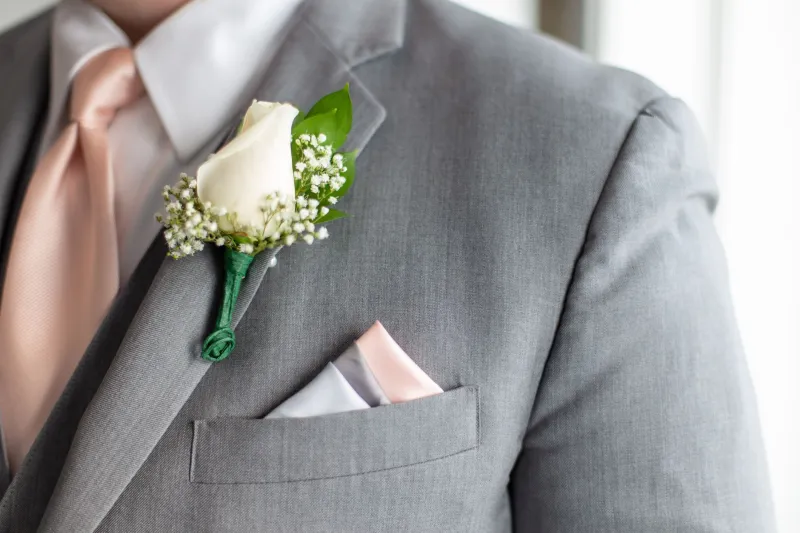
Accessories should support the chosen register, not compete with it. A white linen pocket square, folded simply, is almost always right. Cufflinks are appropriate with a double-cuffed shirt; keep them plain. A dress watch with a leather strap is better than a smartwatch, which should be left at home. If you wear a wedding ring or signet ring, keep it; anything more begins to look like effort.
The bow tie is the clearest signal. Wear one with a dinner jacket, and do not wear one with an ordinary suit unless you are certain of the room. A long tie with a dinner jacket is a common compromise, but it is rarely a successful one; it makes the jacket look like a mismatched costume. If you are unsure, the suit and long tie is the safer route.
Weddings, galas and city dinners
At a wedding, the couple's wishes come first. Black tie optional at an evening wedding usually means dinner jackets are welcome, but the groom's own choice should set the tone. If he is wearing a suit, a dinner jacket may still be appropriate, but it should be quiet and well judged. At a winter gala, the balance tips towards the dinner jacket; the setting and the hour do most of the work. At a City dinner, observe the host and the venue. A private dining room in a club may be more forgiving than a livery hall, but the same principle applies: match the formality, do not exceed it.
The final check
Before leaving, stand in front of a full-length mirror and ask whether the outfit looks as if it belongs to the occasion. Check the shoes, the shirt cuffs, the tie knot and the outer layer. An overcoat should respect the suit beneath it, not crush it. If you are still uncertain, choose the quieter option and wear it well. Black tie optional rewards judgement, not display. The man who gets it right will not look as though he has tried hardest; he will look as though he understood the room.