A Square in Hand: Five Pocket-Square Folds for Weddings, the Races and Winter Dining
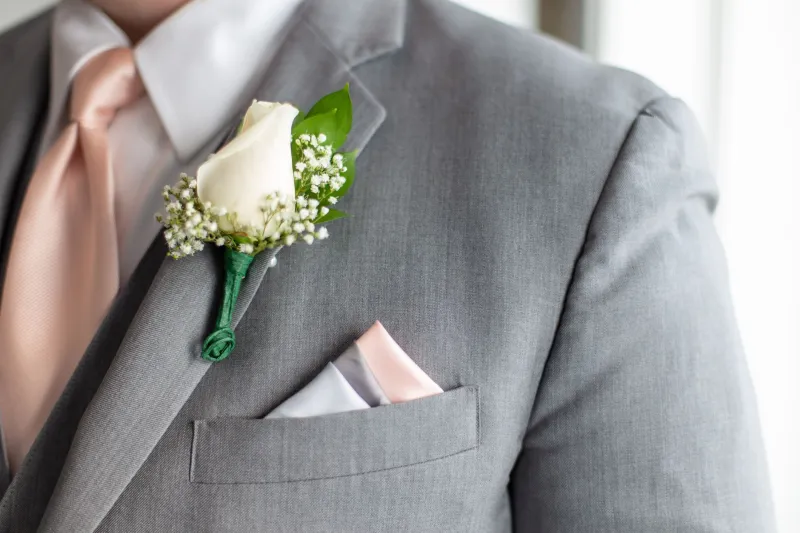
The pocket square is the smallest piece of tailoring in the outfit and often the one that decides whether the whole look feels considered or contrived. In British formal dress it is not a peacock gesture. It is a quiet completion of the line from collar to lapel, and it should answer the occasion, the cloth and the weather rather than announce itself. The five folds below are not rules for their own sake. They are ways of making a few square inches behave properly at a wedding, a race day or a winter dinner.
Start With Fabric, Not the Fold
A pocket square should be chosen for the same reasons as a tie: texture, weight and the quality of the light. Crisp linen is the safest daytime choice and sits well at garden weddings, summer race meetings and informal receptions. Cotton is slightly softer and less expensive, though it can look flat in photographs. Silk has a sheen that suits evening dress and winter dinners, but it can look out of place in bright midday sun. Wool or flannel is excellent in cold weather and pairs naturally with tweed, flannel and velvet. Avoid stiff satin squares, which tend to read as hired formalwear rather than personal tailoring. As a rule, let the fabric choose the fold: linen takes a point, silk takes a puff, wool takes a soft roll.
The Straight Fold: Black Tie and Formal Winter Dinners
The straight fold, sometimes called the presidential fold, is a flat band of cloth across the breast pocket with a clean horizontal edge. It is the most restrained option and the best choice for black tie, where the dinner suit should do the talking. Use white linen for a classic look, or a muted silver silk for a winter dinner in a velvet jacket. Keep the visible band narrow, roughly the width of two fingers, and resist the urge to pull it into a perfect triangle. The common mistake is making the band too wide or allowing a second fold to peek above it, which turns a clean line into clutter. With a dinner suit, a white square is rarely wrong; with a dark velvet jacket, a deep burgundy or forest green silk can add warmth without competing with the tie.
The One-Point Fold: Race Days and Morning Dress
The one-point fold gives a single crisp peak above the pocket. It is the natural companion to morning dress, a well-cut navy suit at a summer wedding or a race-day outfit at Ascot, Goodwood or Cheltenham. Linen and cotton work best because they hold the point without looking sharpened. Keep the peak modest and slightly off-centre rather than military-straight. Colour should support the tie, not duplicate it: a white or cream square with a patterned tie, or a pale blue square with a navy tie. At race meetings, check the dress code for the enclosure before you travel. A pocket square will not rescue an outfit that fails the course rules, and a brightly coloured square can look garish against a formal morning coat. If the tie is bold, the square should be quiet; if the tie is plain, the square may carry a little texture.
The Two-Point Fold: Weddings With a Little More Formality
The two-point fold produces twin peaks and sits between the discipline of the one-point and the softness of the puff. It suits wedding guests, fathers of the bride or groom, and daytime ceremonies where the tailoring is formal but not rigid. Silk or a silk-linen blend gives a cleaner edge; linen gives a softer, more relaxed finish. Use it to echo a secondary colour in the tie, the waistcoat or the bride’s palette, but do not match the tie exactly. The mistake here is symmetry taken too far: two peaks of identical height can look manufactured. Let one sit slightly lower, and keep the folds narrow. With a checked or striped tie, choose a plain square; with a plain tie, a subtle pattern or texture is enough.
The Puff: Relaxed Weddings and Daytime Receptions
The puff is a soft, rounded cloud of cloth rather than a folded point. It is the most forgiving fold and the best choice for less formal weddings, marquee receptions, summer parties and unstructured suits. Linen and cotton are ideal; silk can collapse too quickly. Keep the puff compact so that it sits inside the pocket rather than spilling over the top. Soft sage, dusty pink, pale blue or cream work well with summer tailoring, but avoid high-contrast colours that draw the eye away from the face. The puff should look as though it has been placed rather than sculpted. If you are wearing a tweed jacket or a suit with a softer shoulder, a puff will feel more natural than a sharp point. It is less successful with black tie, where the straight fold remains the safer choice.
The Shell or Rolled Fold: Winter Dinners and Velvet
The shell fold, sometimes called the rolled fold, creates a soft curl of fabric with no hard points. It is particularly good in winter, when wool, flannel and velvet call for texture rather than crispness. A silk-wool square in burgundy, charcoal or deep green sits well with a velvet dinner jacket or a flannel suit. Pair it with a textured tie rather than a shiny one, and keep the roll loose enough to look unforced. The mistake is to roll too tightly, which makes the square look like a small sausage sitting on the pocket. A shell fold should have depth and a little irregularity. In low winter light it adds warmth without pattern, which is often exactly what a formal dinner needs.
Colour, Cloth and the Avoidance of Matching Sets
The fastest way to make a pocket square look fussy is to buy it as part of a matching tie-and-square set. British formal dress works best when the square echoes rather than repeats. With a navy suit, white linen is the default; a burgundy silk or a muted olive square can work if the tie is plain. With a grey suit, a pale blue or dusty pink square adds softness. With morning dress, white or cream is safest. Consider the lapel: a patterned square competes with a patterned tie, so keep one plain. Scale matters too. A large, bold print in a small breast pocket can look cramped; a small neat pattern can disappear from a distance. If in doubt, choose texture over pattern and let the cloth do the work.
Common Mistakes That Make a Square Look Fussy
The first mistake is showing too much cloth. A pocket square should sit in the pocket, not on it. The second is over-folding: too many points, too many creases and too much precision make the square look like a display piece. The third is ignoring the occasion. A shiny silk square can look wrong at a daytime wedding, just as a casual linen puff can look underdressed at a winter dinner. The fourth is matching the tie exactly, which suggests a purchased set rather than a considered wardrobe. The fifth is fiddling. Once the square is in place, leave it alone; constant adjustment draws attention to the very detail that should be incidental. A slightly imperfect fold is usually more persuasive than a perfect one.
A Final Check Before Leaving
Before you leave the house, stand back from the mirror and look at the whole outfit rather than the pocket alone. Check the square in daylight and in artificial light, because silk can change character under evening lamps. Make sure it stays put when you put on an overcoat, and keep a spare white linen square at home for emergencies. The pocket square is a small thing, but it is one of the few pieces of formal dress that can be adjusted at the last minute. Used with restraint, it finishes the outfit. Used as a flourish, it distracts from it.