Invitation Wording, Translated: What to Wear to a British Wedding
Photo: Rod Waddington from Kergunyah, Australia, CC BY-SA 2.0, via Wikimedia Commons
An invitation is a set of instructions written in polite code. ‘Morning dress’, ‘black tie optional’, ‘lounge suit’ — each phrase describes a defined outfit, and each one is easier to meet than the anxious guest usually imagines. What follows is a translation, arranged from the most formal daytime dress down to the least formal, with notes on cloth and fit that hold for the 2026 wedding season and the years beyond it.
Read the wording before you open the wardrobe
Read the card twice. The time of day governs formality more reliably than any other single clue: a ceremony at eleven and a reception ending at six is a daytime occasion, whatever the couple’s taste in flowers or venues. The venue supplies the second clue. A parish church followed by a marquee on the family lawn calls for something different from a city hotel ballroom with an evening start.
Where a code is named, follow it literally. Where none is given, dress one notch above the majority you expect to see, and never below it.
Morning dress: the daytime formal standard
‘Morning dress’ means a morning coat — cut away at the front, tails at the back — worn with striped cashmere trousers, a waistcoat in grey, buff or dove, and an ordinary collar and tie. Black Oxfords, well polished; patent is for the evening and looks wrong in daylight.
On fit: the coat should close at the waist on a single button without pulling, the tails should fall to the back of the knee, and the trousers should break once, lightly, over the shoe. A waistcoat that rides up when you sit is an inch too short.
On cloth: a worsted of roughly 8–9oz suits a summer wedding, while flannel reads warmer for spring and autumn dates. Hiring is entirely acceptable and common in Britain; if you hire, book early and insist on a fitting rather than a collection the day before.
Black tie: the evening default
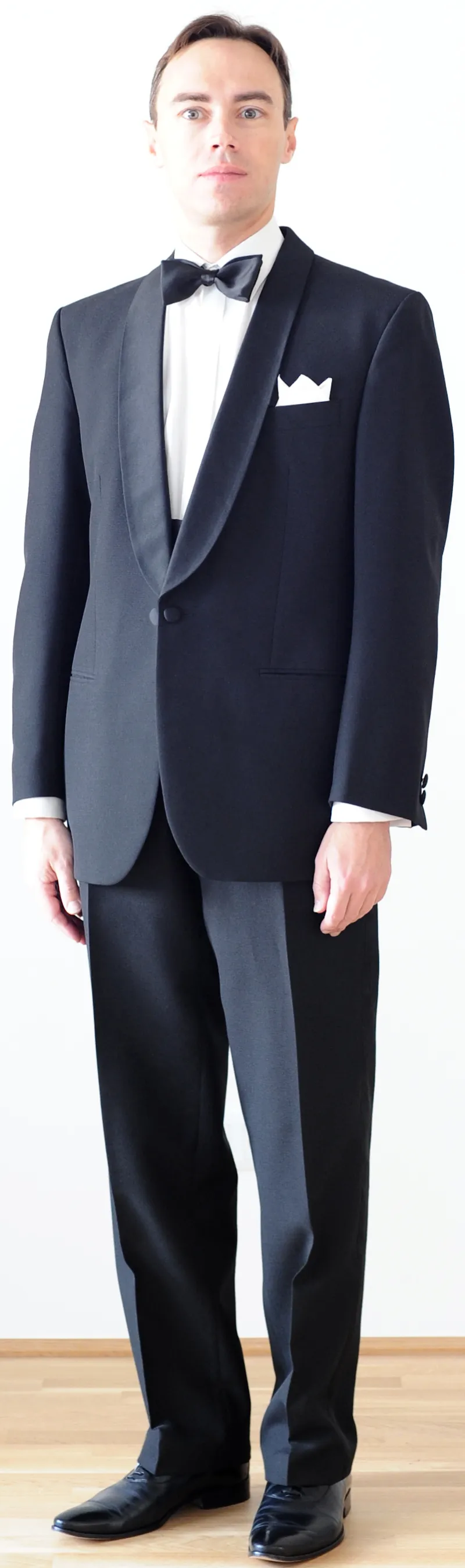
A dinner jacket in black or midnight barathea, with silk or satin facing on shawl or peak lapels, worn with a self-tied bow, a turn-down collar and patent or highly polished evening shoes. A cummerbund is optional; a black waistcoat is equally correct. A long tie is not.
The jacket should sit close to the body with a clean chest, the sleeve should show a quarter-inch of shirt cuff, and the trousers carry a single braid and no belt. If you own only one evening outfit, keep it plain — the pocket square and the novelty bow can wait.
Lounge suit: the honest middle
Most British invitations say ‘lounge suit’ and mean it. A pressed two-piece in navy or charcoal worsted, a white or pale blue shirt, a tie in wool, grenadine or a restrained print, and polished leather shoes. In autumn and winter, a knitted tie sits well against flannel.
Avoid a black suit at a daytime wedding; it photographs like mourning. Fit matters more than colour: shoulders that sit flat, a sleeve showing a little cuff, and a trouser hem that touches the shoe without pooling. If the suit needs work, allow three weeks at the tailor rather than three days.
Smart casual: where guests most often misjudge
At a wedding, ‘smart casual’ is not a licence for jeans and trainers. It means a jacket — hopsack blazer, soft tweed or unstructured wool — with tailored trousers or pressed chinos, an open-collar shirt and leather shoes. Knitwear is fine in cooler months, worn over the shirt rather than instead of it.
The decision tree
- Is the ceremony before six? Assume daytime dress unless told otherwise.
- Does the invitation name a code? Follow it exactly; do not improve on it.
- ‘Black tie optional’? Wear black tie if you own it. A dark lounge suit with a tie is a perfectly respectable alternative.
- No code, evening reception in a hotel? Dark suit, tie, polished shoes.
- No code, daytime garden or country house? Blazer and flannels, or a light lounge suit.
- Still unsure? Ask the couple, or someone in the wedding party. A short question is cheaper than an afternoon of feeling wrong.
A tailoring checklist for the season
Six weeks out: try the full outfit on, including shoes, and book any alterations — sleeve length, waist, trouser hem. Four weeks out: check the shirt collar still fastens comfortably and that the tie knot sits neatly in the collar gap. Two weeks out: shoes resoled or polished, buttons re-anchored, any loose lining stitched.
The day before: brush the suit, hang it overnight in moving air, and lay out everything, down to the socks. On the morning: dress in order, take a photograph for your own reference, and leave the house ten minutes early.
Getting the code right is not about spending more. It is about reading the invitation properly and giving your tailor enough notice to make the clothes fit as though the outfit were made for the day.