Before the First Invitation: A Dinner Suit Audit for the 2026 Season
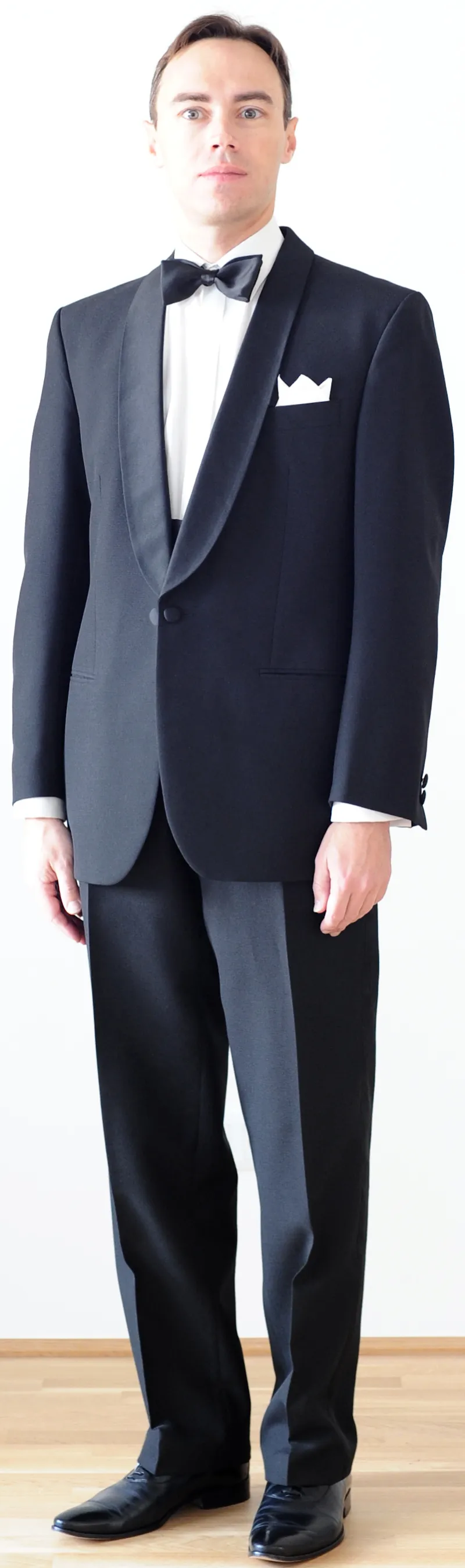
Photo: KoeppiK, CC BY-SA 4.0, via Wikimedia Commons
Black tie has a reputation for being rigid, but most of its conventions exist to protect a simple silhouette. A dinner suit should create an unbroken line from the shoulder to the shoe, with the shirt and bow tie providing the only necessary interruption. When that line is clean, the wearer looks composed; when it is not, even an expensive jacket can appear borrowed.
The 2026 party season is already taking shape in the diary. Invitations for December dinners, office celebrations and winter weddings are arriving, and with them the usual pressure to book fittings, hire outfits and arrange alterations at the last moment. A short audit now is more useful than an emergency appointment later. The five checks below are not about fashion, but about condition and fit: the matters that a tailor can resolve in November and cannot resolve on the evening itself.
Begin at the Shoulder, Where the Jacket Lives
Treat the exercise as an MOT for the dinner suit, and start with the part that carries the most weight. The jacket shoulder seam should end close to the edge of the shoulder bone, neither extending into the sleeve head nor stopping short of it. There should be no deep divot beneath the seam, no sense that the padding is sitting above the natural shoulder, and no collapse when the arm is raised. A dinner jacket with a poor shoulder line will pull across the chest, lift at the collar or hang away from the body, and these are not faults that a routine alteration can disguise.
If the suit is already owned, try it on with the shirt and bow tie you intend to wear, not with a casual shirt. Stand in front of a mirror and turn sideways. The shoulder should look quiet: supported, but not squared off beyond the wearer's frame. If the suit is being hired, ask for a fitting appointment rather than collecting it on the day of the event. Hire stock varies in age and cut, and a jacket that fits at the chest may still be wrong at the shoulder.
Check the Trouser Break Against the Right Shoe
The trouser break is the point at which the hem meets the shoe, and in black tie it should be restrained. A slight break, with the hem just touching the shoe and little or no folding, gives the cleanest line. A pool of cloth over the instep looks casual and shortens the leg; a hem that stops well above the shoe can look anxious. Check the length with the shoes you will actually wear. Formal black tie calls for a polished oxford or a velvet slipper in the correct context, not a trainer or a heavy Derby.
Alterations can raise or lower a hem, taper a leg and adjust the waist within reason. If the trousers are part of a hired outfit, ask whether the shop can pin them for you before the event. If they cannot, consider whether another hire company or a local alterations tailor can help. The waistband should sit at the natural waist, with braces or side adjusters doing the work if the trousers are designed for them. A dinner suit should not rely on a belt.
Align Lapel, Collar and Bow Tie
The upper half of black tie is a series of small alignments. The shirt collar should sit close to the neck without digging in, the bow tie should cover the collar band neatly, and the jacket collar should rest against the shirt without a visible gap. If the jacket collar stands away, the cause may be the shirt collar, the jacket collar or the shoulder fit; a tailor can advise which. The lapel should lie flat against the chest, whether it is peak or shawl, with no curling at the edge.
Press the lapel gently with a cloth if it has been stored badly, but do not iron a sharp crease into it. Check that the jacket closes without pulling at the front button; on a single-breasted dinner jacket, the button should fasten comfortably and the fronts should fall away cleanly. The bow tie itself should be hand-tied if possible, but a well-tied ready-made bow is preferable to a badly tied one. The important point is proportion: the bow should sit within the shirt collar, not spread beyond it.
Inspect Fabric Condition in Daylight
Fabric condition is easy to overlook under artificial shop lighting. Look at the suit in daylight, paying attention to the underarms, the inside of the elbows, the seat of the trousers and the front of the thighs. Shine on the cloth suggests wear; small holes may indicate moths; let-out marks or faded seams may show that the garment has already been altered heavily. For a hired suit, inspect it before leaving the shop and ask for any faults to be noted.
Dry cleaning is not a substitute for repair. Over-cleaning can dull the surface of wool and shorten the life of the cloth. If the suit has been stored since last winter, air it for a day, brush it lightly and hang it on a broad hanger. Check that the trousers have a crease that falls straight from the knee to the hem, and that the jacket has not developed a memory of the hanger at the shoulders.
Book the Small Alterations Before December
The alterations worth booking now are usually modest: sleeve length, waist suppression, trouser hem and perhaps a small take at the seat. Sleeve length should allow roughly one centimetre of shirt cuff to show when the arm is at rest. Waist suppression should clean up the back without turning the jacket into a fitted blazer. Trouser hem and taper should follow the shoe and the leg, not a passing trend.
Timing matters as much as the work itself. Book an initial fitting in mid-November, allow a second fitting in late November if the tailor recommends it, and collect in early December. Alteration workshops fill quickly as December approaches, and a rushed job is rarely a precise one. Keep the receipt and the collection date, and try the complete outfit on at home before the first event. A dinner suit that has been checked in good time is not merely correct; it allows the wearer to forget the clothes and attend to the occasion.