Paying for Proportion: What Made-to-Measure Tailoring Really Buys a UK Man
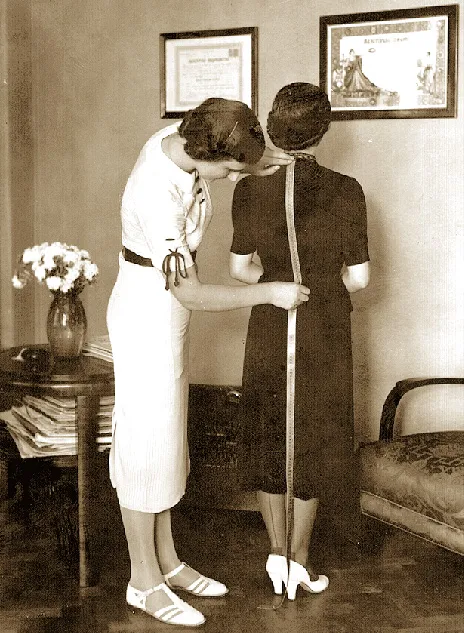
Photo: Gmihail at Serbian Wikipedia, CC BY-SA 3.0 rs, via Wikimedia Commons
The Space Between the Rail and the Bench
Made-to-measure tailoring is often discussed as though it were a lesser form of bespoke, or simply an expensive alteration. Neither description is quite right. In practical terms, a made-to-measure suit begins with an existing pattern block, which is then adjusted to the customer's measurements and posture. Bespoke, by contrast, begins with a new pattern cut for the individual. Alterations, meanwhile, work on a finished garment. The price of made-to-measure reflects the middle ground: more individual attention than a shop-bought suit, but not the labour of a pattern built from first principles.
For UK men, that distinction matters because the market is broad. A made-to-measure commission may be offered by a travelling tailor, a provincial workroom, a city cloth merchant, or a specialist within a larger menswear shop. The terminology is not protected, so the service behind the label can vary considerably. The sensible approach is to treat the price as payment for a defined process, not for a vague promise of fit.
What the Price Actually Covers
A credible made-to-measure service should include several distinct stages: measuring, pattern adjustment, cloth selection, cutting, assembly, at least one fitting, and final pressing. Some firms include two fittings; others rely on a single fitting and minor later adjustments. The number of fittings is less important than what happens within them, but it should be stated clearly before a deposit is paid.
The cloth is a visible part of the cost, yet it is not the whole story. Labour, workroom overheads, the tailor's fitting time, and the risk of remaking a garment all contribute. A suspiciously low price usually indicates either a limited adjustment range, a short fitting process, or a garment assembled abroad with only superficial input from the named tailor. None of those outcomes is automatically unacceptable, but the customer should know which one they are buying.
Value in made-to-measure is therefore not measured by the number of measurements taken. A long tape-measure session can create an impression of precision without guaranteeing a better result. What matters is whether those measurements are translated into sensible pattern changes and whether the tailor can explain the compromises involved.
The Fitting Should Answer Specific Questions
A proper fitting is not a mirror session conducted in silence. It should examine balance, posture, and movement. The jacket should sit cleanly at the back of the neck, with the collar holding the shirt collar without a gap. The shoulders should feel supported rather than padded into shape. The sleeve should hang with a natural pitch, so that the fabric does not twist towards the front or back.
The trousers deserve equal scrutiny. Waist and seat should be comfortable when seated, not merely when standing. The rise should suit the wearer's proportions and the intended occasion. The break over the shoe should be agreed with reference to the shoes the customer will actually wear. A tailor who only inspects the front view is missing half the evidence.
Made-to-measure can usually adjust jacket waist, chest, sleeve length, trouser waist, seat, leg width, and length. It can often improve collar fit and sleeve pitch within limits. It cannot reliably transform a shoulder line that is fundamentally wrong, nor can it correct a pattern block that is unsuitable for the wearer's posture. Those are bespoke problems, and a made-to-measure tailor who claims otherwise is either inexperienced or overpromising.
Questions Worth Asking Before the Deposit
First, ask which measurements drive the pattern adjustment and who translates them. A shop assistant may take the measurements, but the cutting and pattern work may happen elsewhere. Second, ask how many fittings are included and whether later adjustments are covered. Third, ask where the garment is made and by whom. Fourth, ask what happens if the finished suit cannot be made to fit acceptably. Fifth, ask when the final balance is due and on what terms.
A tailor who answers these questions plainly is likely to run a disciplined workroom. Evasiveness is a warning. It is also reasonable to ask to see examples of completed work, particularly on customers with a similar build. Photographs can flatter; a garment on a person is more instructive.
Judging the Work Before the Final Balance
By the final fitting, the customer should be looking beyond immediate comfort. Check the lapel roll: it should curve rather than lie flat and stiff. Check the buttonholes and stitching for consistency. Check the lining and internal finishing, not because they will be seen, but because they indicate the standard of assembly. Move the arms, sit down, and walk. A suit that only works in a static pose is not finished.
If something is wrong, raise it before the final balance is paid. The final payment is the customer's remaining leverage. A reputable tailor will expect a reasonable correction period, but the customer should not accept a promise of future adjustment in place of a garment that fits now. Made-to-measure is not bespoke, and it will not be perfect in the way a hand-cut garment can be. It should, however, be proportionate, comfortable, and honestly described. That is what the price is really buying.