The Considered Load: Carrying Daily Essentials in Tailoring
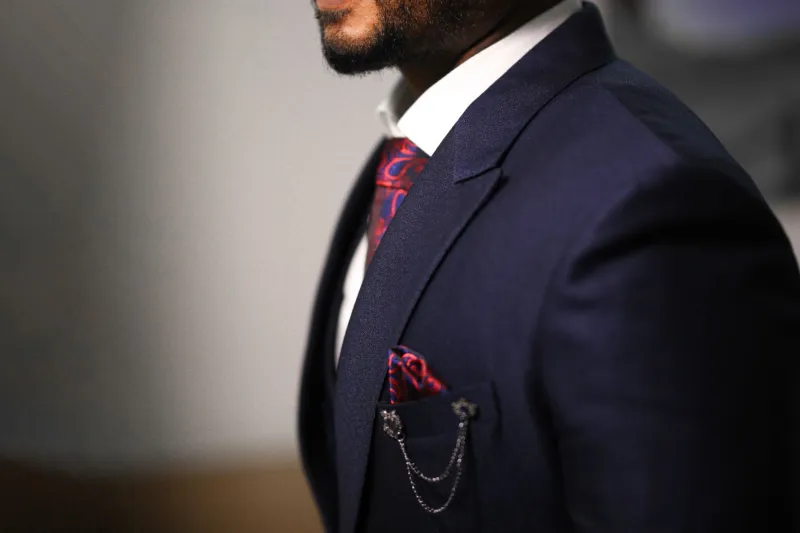
A well-cut suit is designed to hang cleanly from the shoulder. Its pockets are there for use, but they are not storage. The difference between a man who looks composed in tailoring and one who looks burdened often comes down to what he has chosen to carry, and where he has chosen to put it. The aim is not to travel empty-handed; it is to carry only what the day requires, in a manner that respects the cloth.
Begin With the Jacket's Line
The jacket is the most visible part of the suit, and its line is easily spoiled. A phone in an outer pocket can drag one side of the jacket out of balance; a bunch of keys in the opposite pocket can create a second, competing bulge. The breast pocket should be reserved for a pocket square, a pair of spectacles if they are needed, or nothing at all. It is not the place for a phone, a wallet or a travel card.
Inner pockets are generally the more discreet option, but they are not a licence to overfill. A slim phone in an inside breast pocket will often sit more quietly than one in an outer pocket, though on a close-cut jacket it can still pull the front edge away from the chest. If the jacket has an inside waist pocket, use it for a flat cardholder rather than for anything bulky. The guiding principle is simple: keep the weight close to the body, keep it flat, and keep it balanced.
The Daily Three: Phone, Wallet, Keys
Most men carry the same three objects every day. Each has a sensible place in formal tailoring, provided the object itself is not oversized.
A phone should be as slim as practical. A bulky protective case may be useful on a building site, but it is less helpful beneath a suit jacket. Carry the phone in an inside pocket, or in the overcoat when one is worn. If the jacket is very close-fitting, consider leaving the phone in the coat and keeping the suit pockets free.
A wallet should be a cardholder or a slim billfold, not a folded repository for receipts, loyalty cards and coins. The back trouser pocket is the worst position for a wallet: it distorts the seat of the trousers, affects posture when sitting, and becomes visible the moment a jacket is removed. Use an inside jacket pocket or a front trouser pocket, and clear out old receipts regularly.
Keys are the most difficult item. A single key is manageable; a heavy bunch is not. A slim key organiser or a small leather pouch will reduce noise and bulk. If keys must be carried in the suit, place them in an inside pocket rather than a trouser pocket, where they will wear against the cloth. In winter, the overcoat is the better home for them.
What the Trousers Should Not Carry
The trousers of a suit are cut to hang in a clean line from the hip to the shoe. Front pockets should hold only flat, light items, if they are used at all. A phone, wallet or key bunch in a front pocket will break that line and, over time, wear the pocket bag and the cloth around it. Back pockets should be left empty. This is not a matter of etiquette alone; it is a matter of preserving the shape of the garment.
If the day requires more than the jacket can comfortably hold, a slim leather document case or a small bag is a more considered solution than filling every pocket. For formal occasions, however, the better answer is usually to leave the surplus at home or entrust it to a coat check.
Weddings, the Races and Winter Dining
A wedding day imposes its own small inventory. The pocket square belongs in the breast pocket and should be the only thing there. The buttonhole is pinned to the lapel, not stored in a pocket. A folded order of service can be held or left in the coat; it should not be crammed into the jacket. Spare cufflinks, collar studs or a spare button can be given to the best man or kept in a small envelope in the coat. The phone should be silenced and, during the ceremony, put away entirely.
At the races, the racecard is the awkward item. It is too large for a suit pocket and should not be folded into the breast pocket. Carry it in the hand, place it in the overcoat, or leave it on the table between races. Betting slips and pens should be kept to a minimum; a slim cardholder is sufficient for cash and cards.
Winter dining brings coats and gloves into play. Gloves, scarf and keys belong in the overcoat, not in the suit. When the coat is checked, those items go with it. A suit jacket should not be made to absorb the bulk of winter accessories, and a restaurant chair is not improved by a scarf stuffed beneath the jacket.
A Short Checklist Before Leaving
Empty the pockets of coins, receipts and anything that has accumulated during the week. Check that the phone is slim and placed in an inside pocket or the overcoat. Use a cardholder rather than a thick wallet. Keep keys to a minimum and put them in the coat when possible. Leave the back trouser pockets empty. Reserve the breast pocket for a pocket square. For weddings and the races, decide in advance what can be left with a companion, a coat check or the car.
The pocket ledger is not about deprivation. It is about choosing what the day actually requires and carrying it in a way that allows the suit to do its work. A man who carries less, and carries it well, will always look more at ease in formal tailoring.